

Native Plants
Planting 101

Planting 101

If you missed our yearly plant sale or we sold out of the plants you were hoping for, browse this map to find local retail and wholesale companies selling native plants.


Why we need Native Plants
Native plants have adapted over thousands of years to each region’s unique environmental conditions.
-
Native plants are sustainable, adapted to thrive in their region’s soils and weather conditions.
-
Many natives are deep-rooted, slowing down stormwater and improving water quality and reducing erosion.
-
Natives don't need fertilizer or extra watering once established.
-
Native plants provide quality food and shelter for wildlife (habitat).
-
Native plants are beautiful.
-
Native plants (especially "Keystone" plants) are needed by many of our native pollinators and other wildlife who will not survive without them.
Including native plants in your yard will create a welcoming sanctuary along with many other benefits.


Common Native Plants
Title | Image | Description | More Info | Botanical Name |
|---|---|---|---|---|
Early Blue Violet | Perennial
Height: 4 in
Light: Part shade
Moisture: Moist - Dry
Bloom: Blue Violet, April - July | The Early Blue Violet is the sole hostplant for the Oregon silverspot butterfly. Although the Oregon silverspot butterfly has been extirpated from Washington, WDFW has led habitat restoration efforts on coastal sites in Pacific County in preparation for future butterfly reintroductions. | Viola adunca | |
NOTE: Fire-resistant does not mean fireproof! Even fire-resistant plants will burn if not well maintained. Be sure to keep all of your landscape plants healthy with appropriate watering, proper pruning, etc.
Native plants for Rain gardens
Plants in zone 1 need to be able to tolerate wet conditions and seasonal flooding.


Plants for shady zone 1
Slough sedge (Carex obnupta)
Small-fruited bulrush (Scirpus microcarpus)
May Lily (Maianthemum dilatatum)
Pacific waterleaf (Hydrophyllum tenuipes)
Ferns Lady fern (Athyrium filix-femina)
Deer fern (Blechnum spicant)
Goat's beard (Aruncus dioicus)
Red-twig dogwood (Cornus sericea)
Black twinberry (Lonicera involucrata)

Plants for sunny zone 1
Dagger-leaf rush (Juncus ensifolius), Taper-Tipped rush (Juncus acuminatus)
Cascade penstemon (Penstemon serrulatus)
Henderson’s checker-mallow (Sidalcea hendersonii)
Rocky Mountain Iris (Iris missouriensis)
Red-twig dogwood (Cornus sericea)
Pacific ninebark (Physocarpus capitatus)
Black twinberry (Lonicera involucrata)
Pacific crabapple (Malus fusca)
Plants in zone 2 need to be able to tolerate moist to occasionally flooding conditions.

Plants for shady zone 2
May Lily (Maianthemum dilatatum)
Oregon wood sorrel (Oxalis oregana)
Sword fern (Polystichum munitum)
Lady fern (Athyrium filix-femina)
Low Oregon Grape (Mahonia repens)
Snowberry (Symphoricarpos albus)
Salal (Gaultheria shallon)
Western Pussy Willow (Salix scouleriana)
Cascara (Frangula purshiana)
Plants for sunny zone 2
Daylily (Hemerocallis spp.)
Giant camas (Camassia leichtlinii)
Henderson's Checker Mallow (Sidalcea hendersonii)
Douglas Iris(Iris douglasiana)
Red-twig dogwood (Cornus sericea)
Snowberry (Symphoricarpos albus)
Western Pussy Willow (Salix scouleriana)
Tall Oregon grape (Mahonia aquifolium)
Pacific crabapple (Malus fusca)
Plants in zone 3 need to be able to tolerate moist to dry conditions.

Plants for shady zone 3
Inside-out flower (Vancouveria hexandra)
Western bleeding heart (Dicentra formosa)
Sword fern (Polystichum munitum)
Evergreen huckleberry (Vaccinium ovatum)
Low Oregon grape (Mahonia nervosa)
Rhododendron macrophyllum
Vine maple (Acer circinatum),
Cascara (Frangula purshiana)
Indian plum (Oemleria cerasiformis)
Plants for sunny zone 3
Black-eyed Susan (Rudbeckia hirta)
Cooley's Hedge-nettle (Stachys cooleyae)
Oceanspray (Holodiscus discolor),
Red-flowering currant (Ribes sanguineum)
Snowberry (Symphoricarpos albus)
Oregon Boxleaf (Paxistima myrsinites)
Tall Oregon grape (Mahonia aquifolium)
Serviceberry (Amelanchier alnifolia), Oceanspray (Holodiscus discolor)
Mock Orange, Philadelphus lewisii


Care should be taken to not plant invasive species as they tend to crowd out the native species. Some common groundcovers, shrubs, and vines are invasive and are prohibited from being planted. Refer to the state list of invasive plants.

Planting for pollinators
The Xerces Society has collaborated with the Lady Bird Johnson Wildflower Center to create plant lists that are attractive to native bees, bumble bees, honey bees, and other beneficial insects, as well as plant lists with value as nesting materials for native bees. These lists can be narrowed down with additional criteria such as state, soil moisture, bloom time, and sunlight requirements.
Washington Native Plant Society Plant Lists and Links

Finding the "Right" Plant
Plant taller trees away from utility lines

Plants all need the same things, but they don't all have the same needs. Some plants need more sun, some need more shade. Some plants need a lot of water, some need very little, and everything in between…
Putting the right plant in the right place, not only increases the likelihood of a happier healthy plant, but also reduces the likelihood of big problems later.
Evaluate what you have to work with. The physical aspects that are there, will direct how you can or should proceed.

Landscaping Tips
-
Use the shape of the land and the availability of light and water to shape your design.
-
When you're designing a landscape, keep planting zones in mind.
-
Group plants together that all have the same moisture and light requirements.
-
Make sure plants that require a lot of water are near a water source. (Sometimes that means a hose or rain catchment)
-
Make sure that plants that require more of your attention are easily accessible.
-
Consider the mature size of a plant. Make sure they have room to grow and make sure that plants that require more sun are not planted next to a plant that will grow and shade them out.

Annual Native Plant Sale
Our 2026 Plant Sale will open online Monday, Jan. 5th at 10:00 AM and close Friday, March 13th at 4:00 PM.
Orders must be picked up on Sunday March 15th between 9 AM and 1 PM
To order more than one bundle, adjust quantity in cart.
2026 Plant Sale List
*This is not a guarantee of species availability when sale opens.
Evergreen Trees

Alaska Yellow Cedar
Callitropsis nootkatensis
Evergreen
Bundles of 25
Height: around 60-120 feet, but up to 200'
Light: Part Sun
Moisture: Moist-Wet

Sitka Spruce
Picea sitchensis
Evergreen
Bundles of 25
Height: 100 – 150 ft, up to 200 ft
Light: Part Shade - Sun
Moisture: Moist - Wet

Grand Fir
Abies grandis
Evergreen
Bundles of 25
Height: 140-200 ft
Light: Mostly Shade – Part Shade
Moisture: Dry - Moist

Douglas Fir
Pseudotsuga menziesii
Evergreen
Bundles of 25
Height: 100-150 and up to 290 ft
Light: Sun-Part Shade
Moisture: Dry – Moist, well-drained soils.

Noble Fir
Abies procera
Evergreen
Bundles of 25
Height: 100-200 ft
Light: Part Shade – Sun
Moisture: Dry – Moist

Western Red Cedar
Thuja plicata
Evergreen
Bundles of 25
Height: 150-200 ft
Light: Shade to Part Shade
Moisture: Moist to Wet
Deciduous Trees & Shrubs

Cascara
Rhamnus purshiana
Deciduous
Bundles of 10
Height: 15-35 ft
Light: Shade - Part Sun
Moisture: Moist - Wet
Bloom: Greenish-yellow, April-June

Blue Elderberry
Sambucus cerulea
Deciduous
Bundles of 10
Height: up to 30 ft
Light: Sun
Moisture Requirements: Dry- Moist
Bloom: May-June

Pacific dogwood
Cornus nuttallii
Deciduous
Bundles of 10
Height: up to 66 ft
Moisture: Moist, well drained
Light: Part Shade - Sun
Bloom: April - June

Oceanspray
Holodiscus discolor
Deciduous
Bundles of 10
Height: up to 10 ft
Light: Part Shade – Sun
Moisture: Dry – Moist
Bloom: White, May-Aug.
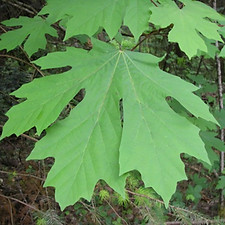
Big Leaf Maple
Acer macrophyllum
Deciduous
Bundles of 10
Height: Up to 80 ft
Light: Sun- Part Shade
Moisture: Dry – Moist
Bloom: March- June, early bloom for pollinators

Red Osier Dogwood
Cornus stolonifera
Deciduous
Bundles of 10
Height: up to 20 ft
Light: Shade – Sun
Moisture: Moist – Wet
Bloom: White, May – June

Paper Birch
Betula papyrifera
Deciduous
Bundles of 10
Height: up to 80 ft
Light: Part Shade - Sun
Moisture: Moist, well-drained soils
Bloom: April - June

Red Flowering Currant
Ribes sanguineum
Deciduous
Bundles of 10
Height: Up to12 ft
Light: Part Shade - Sun
Moisture: Dry – Moist
Bloom: Pink/red, March – June

Mock Orange
Philadelphus lewisii
Deciduous
Bundles of 10
Height: 10 ft
Light: Part Shade - Sun
Moisture: Dry – Moist
Bloom: White, May – July

Oso berry
Oemleria cerasiformis
Deciduous
Bundles of 10
Height: 5-10ft
Light: Part Shade - Sun
Moisture: Dry – Moist
Bloom: White, February - April

Peafruit Rose
Rosa pisocarpa
Deciduous
Bundles of 10
Height: 3-6 ft
Light: Part to Full Sun
Moisture: Dry – Moist
Bloom: Pink, May - July

Hooker willow
Salix hookeriana
Deciduous
Bundles of 10
Height: Up to 20 ft
Light: Part Shade - Sun
Moisture: Dry – Moist
Bloom: February- March
Special Brokered Items

Kinnikinnick
Arctostaphylos uva-ursi
Evergreen
Bundles of 5
Height: Up to 1 ft
Light Requirement: Part Shade - Sun
Moisture: Dry
Bloom: White-pink flowers, April - July.

Salal
Gaultheria shallon
Evergreen
Bundles of 5
Height: up to 6 ft
Light: Sun- Shade
Moisture: Dry – Moist
Bloom: White and pink, May – June

Evergreen Huckleberry
Vaccinium ovatum
Evergreen
Bundles of 5
Height: 2 – 13 ft (depends on site conditions)
Light: Shade - Sun
Moisture: Dry – Moist
Bloom: Pink, March-August
How it works:
Every year, the Conservation District purchases a large order of conservation grade plants from the Plant Materials Center (PMC) to sell at our annual plant sale. Conservation grade is based on survivability, not on looks. They come as bareroot stock, small container stock, or plugs. The decision of what to supply, and how much, is based both on sales from the previous year and what is available to us depending on the cultivating success of certain species that year. Sometimes these plants are species that are grown on-site, and some are brokered stock, which means that they are contracted out and grown elsewhere. The plants are kept in the cold storage at the PMC until pick-up day.
Purpose of the Plant Sale:
The purpose of the plant sale is to promote natural resource conservation by providing quality, conservation-grade native plants at wholesale prices. These plants are beautiful, hardy, and serve a purpose in conservation projects such as erosion control, riparian restoration, reforestation, backyard habitat enhancement, wetland restoration and wildfire mitigation. Proceeds from the plant sale help fund youth education efforts.
This sale is self-supporting. Our staff and volunteers work very hard to make the sale run as smoothly and seamlessly as possible for our customers. Each year holds new challenges, and we do our best to adjust and accommodate for them. The Conservation District welcomes suggestions on how we can improve the process on sale days- don't hesitate to reach out! Thanks for your support!
FAQs
How do I order plants?
Online Order. Please sign up for our mailing list to be alerted when we open up the online sale. Quantities are limited and many species will sell out, so make sure to order early if there are specific plants you're hoping to get!
See a list of plants frequently sold at our sales Here
What is the minimum order?
Plants come in bundles and for bundling purposes, the minimum plant order is $50 before taxes.
Where do I pick up my plants?
All orders must be picked up on the designated pickup date at the Plant Materials Center.
*Any plant orders not picked up will be donated to local restoration projects.*
WACD Plant Materials Center
16564 Bradley Rd
Bow, WA 98232
Bareroot Plant Storage
Prior to packing, the plants are held in cold storage at about 34°F. Once the plants have been repacked, they begin to break dormancy and should be planted within about 3 days.
Package and handling
Packaged plants should be kept out of the sun, in a cool place. Plants should not be kept packaged for extended periods of time and should be planted or potted up as soon as possible. Handling Tips For Improving Tree and Shrub Plantings
How big are the plants?
Your plants will be bare root. This means they will not be coming in a pot, but rather a compact bundle that will be packed in a convenient bag for travel. You shouldn't need a trailer or even a truck to pick up your order! The bundles are more compact than most people expect, since they are bare root.
Returns and Changes
All sales are final. We do not accept product returns or changes. If you have placed an order and would like more plants, please place another order. If we cannot fill part of your order due to a shortage from the nursery, a plant substitution or refund will be offered.
Plant Mortality
We do not offer any guarantee regarding the survival of the plants. Generally, you can expect about 10-20% plant mortality, however this can vary depending on how plants are handled after pick-up, site conditions, and species. For best survival please visit our native plant page.
*Once the plants have been repacked, they begin to break dormancy and should be planted within about 3 days. Plants not picked up on the day of sale will be donated to local agencies and non-profit organizations for the benefit of the public. No refunds will be issued for plant orders not picked up.*
What if the plants are sold out?
We are sorry we sold out of plants. Other places to purchase native plants can be found here.